

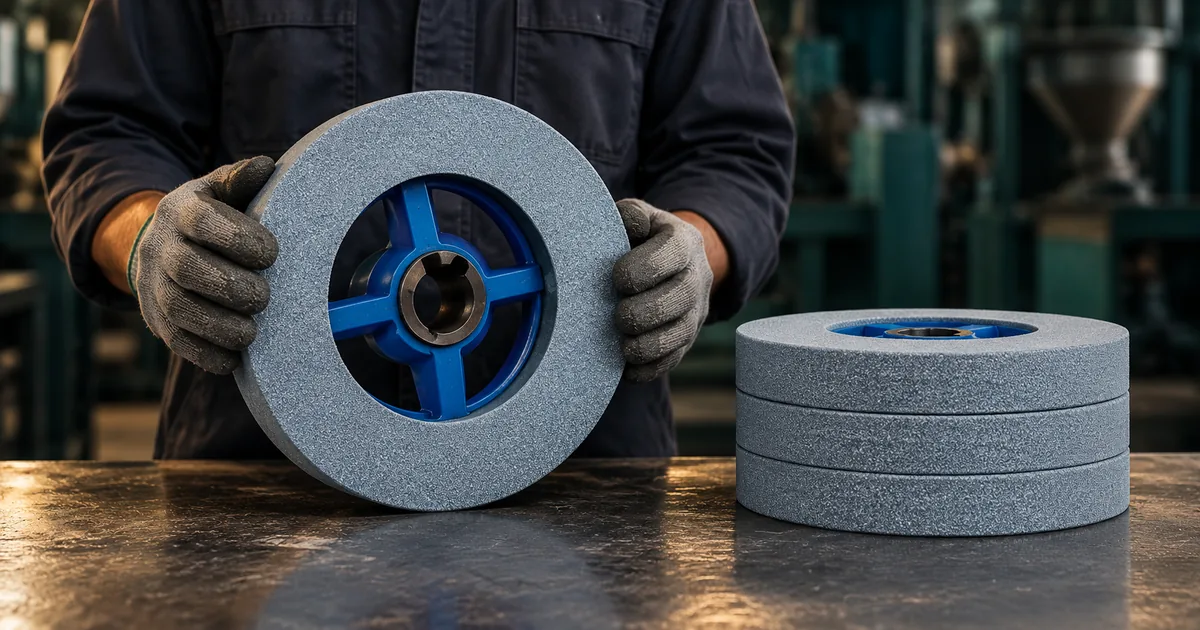
A worn rice polishing wheel does not announce itself with a breakdown - it fails slowly, costing you broken grain and energy every shift while appearing to still work. Knowing the specific signs that a rice polishing wheel replacement is due - before whiteness drops and breakage spikes - is one of the most cost-effective habits in rice mill operation. This guide covers 7 concrete signs to watch for, what causes premature wear, and how to buy the right replacement. From Gold Mohur Overseas.
How Rice Polishing Wheels Work and Why They Wear
The whitener’s polishing wheel (emery roll or abrasive stone) removes the bran layer from brown rice through abrasion. The grain is pressed against the spinning wheel surface by a resistance screen, and bran is stripped off. The wheel surface - made of abrasive grains bonded in a matrix - gradually wears and glazes as the bonding matrix erodes and abrasive particles dull.
Once the surface glazes, the wheel polishes by pressure rather than cutting - more heat, more energy, more breakage, and lower whiteness per pass. This is the failure mode you are trying to catch before it costs you.
Sign 1: Whiteness Output Dropping Below Target
The most direct sign. If your target whiteness is 40-42 (Kett meter) and output has drifted to 36-38 without a pressure change, the wheel has lost cutting efficiency. Before blaming paddy quality, check the wheel surface. A fresh wheel restoring target whiteness at the same pressure confirms the diagnosis.
Sign 2: Broken Rice % Rising at Polisher Output
A glazed wheel creates localised hot spots - zones where pressure is concentrated rather than abrasive action doing the work. These pressure zones crack the grain at the bran layer interface, increasing broken rice %. If breakage at polisher output is rising but whitener gap and screen condition are unchanged, the wheel is the first suspect.
| Broken Rice % at Polisher | Likely Cause |
|---|---|
| 2-4% (normal) | Wheel in good condition, correct pressure |
| 4-7% | Early wear or glazing - inspect and dress wheel |
| Above 7% | Advanced wear - replace wheel immediately |
Sign 3: Visible Glazing on Wheel Surface
Stop the whitener and inspect the wheel surface directly. A healthy wheel surface is rough and granular - you can feel individual abrasive particles. A glazed wheel surface is smooth and shiny, sometimes with a glassy appearance where the abrasive matrix has filled over. Run your thumb lightly across the surface: if it feels like sandpaper, the wheel is working. If it feels like polished ceramic, it has glazed.
Dressing vs Replacing
If the wheel has glazed but still has sufficient diameter (above 85% of original), dressing is an option - a dressing tool or diamond dresser removes the glazed layer and exposes fresh abrasive. This extends wheel life by 20-30 tonnes but does not substitute for replacement when the wheel is structurally worn.
Sign 4: Whitener Motor Current Rising
Measure motor current with a clamp meter during normal operation. If current is rising week-on-week without a change in throughput or pressure setting, the wheel is working harder to achieve the same result. A glazed wheel draws 10-20% more current than a fresh wheel at the same pressure - adding ₹3,000-8,000/month in electricity on a 1 TPH mill for zero additional output.
Sign 5: Uneven Whiteness Across the Grain Stream
Scoop a sample from the whitener output and spread it on a flat surface. If whiteness varies visibly - some grains bright, others still carrying bran - the wheel has developed uneven wear across its width. This happens when paddy feeding is concentrated in one lane, or when the wheel was not replaced on schedule and wear has progressed unevenly.
Sign 6: Visible Cracks on Wheel Surface
Any visible crack on the polishing wheel surface is a replacement trigger - no exceptions. A cracked wheel can shed fragments into the grain stream (food safety issue) or catastrophically fail under load. Run your hand over the wheel surface with the machine off and inspect under a torch. Hairline cracks count.
⚠ A cracked wheel must be replaced before the next shift. Running a cracked abrasive wheel is a safety hazard. Flying abrasive fragments can injure operators and contaminate grain.
Sign 7: Wheel Diameter Reduced More Than 15%
Measure wheel outer diameter at three points along the width using calipers. Most standard whitening wheels are 200-300mm outer diameter when new. When diameter has reduced by more than 15% of original - e.g., from 250mm to 212mm - replace regardless of visual condition. At this wear level, the gap between wheel and screen changes, pressure distribution becomes unpredictable, and consistent whiteness cannot be maintained.
What Accelerates Polishing Wheel Wear?
| Factor | Effect on Wheel Life |
|---|---|
| Parboiled rice | 2-3x faster wear than raw paddy |
| Paddy below 12% moisture | Harder grain - 20-40% faster wear |
| Pressure set too high | Increased abrasion - faster wear, more breakage |
| Throughput above rated | More grain per rotation - faster wear |
| Stone or sand contamination in paddy | Rapid abrasive wear + possible cracking |
📌 Track tonnage per wheel. Most mills replace wheels by feel or after a visible problem. Tracking processed tonnage per wheel allows you to set a proactive replacement interval - typically 80-120 tonnes for raw paddy, 40-60 tonnes for parboiled. Proactive replacement costs less than the breakage from a worn wheel in its final 20 tonnes.
Buying the Right Replacement Polishing Wheel
- Match the grit grade to your paddy: coarser grit for parboiled (faster bran removal), finer grit for premium white rice (lower breakage)
- Match dimensions exactly: outer diameter, inner bore, and width must match your whitener model
- Check bond type: vitrified bond for stone wheels (harder, precise); resinoid bond for emery rolls (more flexible, less brittle)
- Buy from a known source: substandard abrasive wheels can shed particles into grain or crack prematurely under load
- Keep one spare set on-site: polishing wheel failure mid-season with no replacement = production stoppage
FAQ: Rice Polishing Wheel Replacement
How long do rice polishing wheels last?
80-150 tonnes for raw paddy; 40-60 tonnes for parboiled rice. Paddy below 12% moisture and throughput above rated capacity both reduce wheel life significantly. Track tonnage per wheel and replace proactively.
What are the signs a rice polishing wheel needs replacement?
(1) Whiteness output dropping; (2) Broken rice % rising at polisher; (3) Visible glazing on wheel surface; (4) Motor current rising; (5) Uneven whiteness across grain stream; (6) Visible cracks; (7) Diameter reduced more than 15% of original.
What happens if you run a rice mill with a worn polishing wheel?
Glazed wheel polishes by pressure not cutting - more heat, more energy, higher breakage. Running a worn wheel for an extra 20-30 tonnes costs ₹10,000-30,000 in breakage and energy on a 1 TPH mill, far more than the replacement wheel cost.
Can you dress or recondition a rice polishing wheel?
Yes, if diameter is above 85% of original. Use a dressing tool to expose fresh abrasive. Effective for glazed wheels; not effective for cracked or structurally worn wheels. Dress as an interim measure; replace on schedule.
What is the difference between an emery roll and a stone wheel?
Stone wheels: gentler abrasion, lower breakage, preferred for premium long-grain and basmati. Emery rolls: harder, faster bran removal, suited for parboiled rice. Most Indian mills use emery rolls for parboiled, stone wheels for premium white rice grades.
Consistent Dehusking Starts Before the Whitener
Broken grain at the polisher often originates at the husker - worn rubber rollers crack grain before it reaches whitening. Gold Mohur Overseas matched roller pairs reduce upstream breakage. ISO-certified since 1985.