

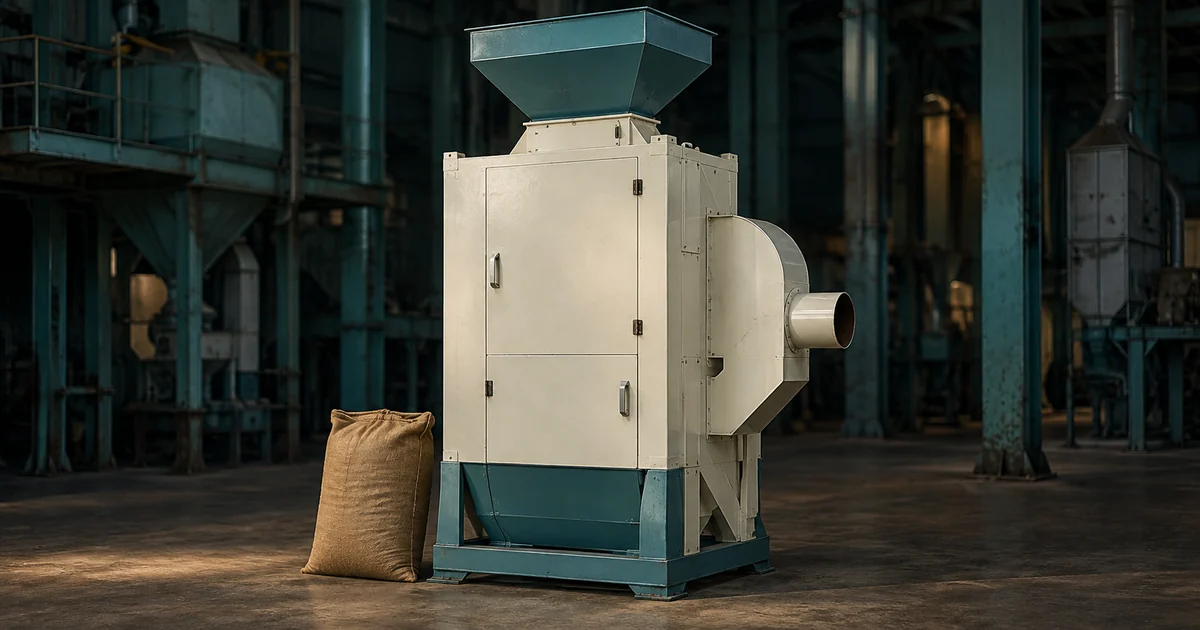
A rice huller (also called a rice husker or huller machine) is the core machine in any rice mill. It removes the tough outer husk from paddy rice - converting raw paddy into brown rice in a single pass. Choosing the right huller machine directly determines your milling efficiency, broken grain percentage, and output quality.
This guide covers types of rice huller machines, how they work, rubber roller vs steel huller comparison, and key buying criteria - from Gold Mohur Overseas, India’s rubber roller manufacturer since 1985.
What Is a Rice Huller?
A rice huller is a machine that mechanically separates the inedible outer husk (chaff) from paddy grains through friction or impact. The process - called hulling or dehusking - is the first milling stage after pre-cleaning. It typically removes about 20% of the paddy’s weight (the husk), leaving behind brown rice with the bran layer intact.
Key Hulling Facts
- Husk = ~20% of paddy weight
- Target: <1% broken rice at hulling stage
- Hulling efficiency: 85-95% (percent of paddy dehusked per pass)
- Unhusked grains return to the huller via paddy separator
- A worn huller roller increases broken rice by 3-8%
Types of Rice Huller Machines
There are two main types of rice huller in commercial use, each with distinct mechanisms and performance profiles:
🌺 Rubber Roller Huller
- Two counter-rotating rubber rolls
- Friction-based dehusking
- Broken rice: 0.5-2%
- Best for long-grain & basmati
- Adjustable roll gap
- Roll life: 60-100 tonnes
- Industry standard worldwide
⚙ Steel Huller (Engelberg)
- Single steel cylinder + concave
- Impact & friction mechanism
- Broken rice: 10-30%
- Best for small/village mills
- Combined huller + whitener
- Low cost, simple maintenance
- Being phased out commercially
For any commercial rice mill processing more than 1-2 tonnes per hour, the rubber roller husker is the only viable choice. The broken grain savings alone justify the higher initial cost within 2-3 months of operation.
How Does a Rice Huller Work? (Step-by-Step)
Understanding the rice huller working process helps you optimise settings and troubleshoot problems:
- Paddy feeding - Paddy enters through the hopper at a controlled feed rate (feed gate controls volume)
- Roll engagement - Paddy passes between two rubber rolls rotating at different speeds (speed differential creates friction)
- Husk removal - The speed difference creates a shearing force that peels the husk without cracking the grain
- Aspiration - An air blower separates light husk from heavier brown rice and unhusked grains
- Paddy separation - A paddy separator returns unhusked paddy to the huller feed
- Brown rice discharge - Hulled brown rice moves to the whitening/polishing section
⚙ Critical Setting: Roll Gap
Roll gap = distance between the two rubber rolls. Too tight = high broken rice. Too loose = low hulling efficiency. Correct gap: paddy passes through with light resistance, producing <2% broken rice. Adjust daily as rolls wear.
Rubber Roller vs Steel Huller: Which Huller Machine Is Right for You?
| Factor | Rubber Roller Huller | Steel Huller (Engelberg) |
|---|---|---|
| Broken Rice | 0.5-2% ✅ | 10-30% ❌ |
| Milling Quality | High - preserves grain | Low - cracks grains |
| Capacity | 1-10+ TPH | 0.1-0.5 TPH |
| Maintenance | Replace rubber rolls (60-100T) | Periodic sharpening |
| Best For | Commercial mills, export quality | Village mills, subsistence farming |
| Grain Types | All - especially basmati & long-grain | Short & medium grain only |
| Global Standard | Yes ✅ | No - legacy technology |
Key Specifications When Buying a Rice Huller Machine
📊 Capacity (TPH)
Match to your paddy throughput. One rubber roller huller typically handles 1-3 TPH. Larger mills run 2-3 hullers in parallel.
🔄 Roll Diameter & Width
Larger diameter = longer roll life. Standard: 10” × 2.5” or 10” × 3”. Wider rolls = higher capacity per hour.
⚡ Speed Differential
The difference in peripheral speed between the two rolls. Optimal: 15-25% differential. Higher = more aggressive dehusking but more breakage.
🏭 Roll Material & Hardness
Rubber hardness (Shore A 40-60) affects grip and wear rate. Harder rolls suit wet paddy; softer rolls suit dry paddy.
Common Rice Huller Problems & Fixes
🔴 High broken rice (>3%)
Causes: roll gap too tight, worn rolls, high paddy moisture (>14%). Fix: widen roll gap, replace worn rubber rolls, check paddy moisture before milling.
🟠 Low hulling efficiency (<80%)
Causes: roll gap too wide, feed rate too high, paddy size variation. Fix: tighten roll gap gradually, reduce feed rate, clean aspirator.
🟢 Excessive roll wear (less than 60T life)
Causes: paddy has stones/impurities, incorrect rubber hardness for paddy type. Fix: improve pre-cleaning, use correct roll hardness, check roll alignment monthly.
🔵 Vibration & noise
Causes: unbalanced rolls, worn bearings, loose mounting bolts. Fix: balance rubber rolls after replacement, check bearings every 500 hours.
FAQ: Rice Huller Machine
What is the difference between a rice huller and a rice husker?
Rice huller and rice husker refer to the same machine - a device that removes the outer husk (chaff) from paddy rice. “Husker” is more common in Asia and North America; “huller” is widely used in South Asia and international trade.
How long do rubber roller huller rolls last?
High-quality rubber rolls typically last 60-100 tonnes of paddy processed. Roll life depends on paddy cleanliness (stones reduce life significantly), moisture content, rubber hardness match, and roll gap settings.
What paddy moisture is ideal for a rice huller machine?
Optimal paddy moisture for hulling is 12-14%. Below 12%: grain is too brittle, increasing breakage. Above 16%: husk doesn’t separate cleanly, reducing hulling efficiency and staining the grain.
How often should I replace rubber rolls in my huller?
Replace rubber rolls when: broken rice exceeds 3% consistently, hulling efficiency drops sharply, or roll diameter has reduced by more than 8-10mm from original.
What is hulling efficiency and what is a good target?
Hulling efficiency is the percentage of paddy successfully dehusked in a single pass. Target: 85-95% for rubber roller hullers. If efficiency falls, adjust roll gap and reduce feed rate.
Source Rubber Rolls for Your Huller Machine
Gold Mohur Overseas - ISO-certified rubber roller manufacturer since 1985. Supplying to mills across 40+ countries. Custom hardness & dimensions available.
What does hulling mean in rice?
Hulling is the step that removes the hard, inedible outer husk from paddy to expose the brown rice grain inside. In modern mills it is done by passing paddy between two rubber rolls turning at different speeds, which peel the husk without crushing the kernel.
Is rice hull the same as rice husk?
Yes. The terms hull and husk both refer to the same protective outer layer of the paddy grain and are used interchangeably. This is different from bran, the thin nutrient layer just beneath the husk that is removed later during whitening.
What is hulling percentage in rice?
Hulling percentage is the share of paddy grains de-husked in a single pass through the huller. A well-set rubber-roller huller typically de-husks about 85-90% per pass; unhusked grains are separated and returned for a second pass. This ~85-90% first-pass figure is consistent with IRRI guidance for rubber-roll huskers.
What is a rice sheller?
A rice sheller (or paddy sheller) is another name for the rice huller/husker - the machine that removes the outer husk from paddy by friction between two rubber rolls. The terms rice sheller, rice husker and rice huller are used interchangeably in the milling industry (Wikipedia: Rice huller).